Sunday, January 19, 2014

Melbourne part 2


I've been in Melbourne a few days now and I'm gradually getting used to the clatter of trams past the window at night, and having to look out for them whenever you cross the street. The best tram is of course the FREE City Circle one, which basically does a loop of the city every 10 minutes or so and makes getting around very easy.


The hostel I'm staying in feels much nicer now that the heatwave has dissipated and we are back down to temperatures in the mid-20s. In fact I was actually COLD yesterday, which seems strange to report. I also like the fact that I am located right next to a road called Nicholson Street.

I spent Friday wandering around Melbourne's laneways. These are apparently a city institution, basically like little alleyways with totally random and quirky shops, cafes and restaurants dotted around.

I ended up at Federation Square, which is sort of like the hub of the city. There are bars, restaurants, art galleries etc surrounding it, and a big space in the middle, which is currently filled with deckchairs and a big screen showing the Melbourne Open tennis. I had a wander, and went to see some Australian art at the NGV Australia.


Possibly the best thing about this was that, after a few hours in 40-degree heat, the art gallery was air-conditioned.

It got to about 5pm and I suddenly realised that I hadn't actually eaten for the entire day, so I went to a restaurant on Fed Square called the Chocolate Buddha (recommended by a friend). You could sit inside with air-con but also keep an eye on the tennis through the window, and look out over the city. Lovely.


I went outside after I'd finished and watched the tennis (and possibly fell asleep for a bit, ahem) in the twilight. Then off to a pub opposite Flinders Street station to meet Mel Jones. We've spoken a bit via twitter, and it was great to finally meet up in person. I absolutely loved hearing stories about what it was like to play women's cricket in the legendary Aussie team of the 1990s/early 2000s featuring Jones, as well as Karen Rolton, Cathryn Fitzpatrick and of course Belinda Clark. The historian in me goes a bit crazy whenever I meet ex-international cricketers!

The worst part of the evening was that the men's ODI was on TV in the pub, and somewhere towards the end of the game (keeping half an eye on it while chatting to Mel), I realised that the Aussies around me were starting to pay more attention to the game. Somehow, England were managing to snatch defeat from the jaws of victory, and everyone around me was cheering like mad, while I sat, head in hands. Just a small taste, I suppose, of what it must have been like to be over here during the men's Ashes.

On Saturday, I walked over to the MCG, through Fitzroy Gardens – a beautiful park reminiscent of London parks in summer. It's an odd mixture of English trees, brought over here by Brits and planted a long time ago, and native species – I'm not used to seeing English elms right next to palm trees.


Approaching the MCG, through the trees, was incredibly exciting. Here I was, finally at the home of Australian cricket, and just as there always is when you walk through the Grace Gates at Lord's, there was a certain magic about seeing it in the flesh.


Two things in particular stood out:
  1. It's huge.
  2. Seriously, it's HUGE. (Capacity of 100,000.)

I did one of the official tours, conducted by a Melbourne Cricket Club member, which involved going down onto the edge of the pitch, right up to the top (spectacular views), and into the media centre. Our guide told us that he found it hilarious when he found out recently that each of the desks in the media centre has a label on, which dictates where each journalist sits: the positioning is determined according to seniority. I didn't like to admit to being a member of the press corps, but I did find the desk that, right now, feels like it belongs to me:


At one point we were taken to see the indoor nets, and some of the Southern Stars (the Aussie women's side) were there practising. I couldn't help pointing out who they all were, and I think the tour guide was a bit like “who IS this girl?”

Fun fact I learned on the tour: there are 64 bars at the MCG. That is a LOT of drinking at one cricket ground.

We also got to see the members area: there is a Long Room, named of course after the Long Room at Lord's, and old photographs and memorabilia everywhere, including an amazing photograph of Don Bradman and Sachin Tendulkar, taken not long before the Don passed away. There are only 3 copies of this photograph in existence, and the Don requested that the negatives be destroyed, so it was cool to see one of the prints.


All I kept thinking throughout was that Dad would've absolutely loved being there with me, and wishing he was.

I stayed behind after the tour, to put on my Journalist hat and watch England train for a bit, out in the middle.

Then switched back to Tourist Mode, walking back into the city over the William Barak Bridge, where a plethora of voices talk at you through speakers as you wander over; and into the Immigration Museum for a while. This is housed in the building which used to be the Customs House, where immigrants were processed on arrival into Melbourne. There is an exhibition detailing the history of immigration to Australia, and many of the question posed as to exactly how the immigration process should work in modern-day Oz struck me as also being potent for the UK right now. How do you decide who is part of the nation, and who isn't? And who gets to decide?


Saturday night was lots of fun. Mel had got tickets to the Big Bash match, Melbourne Renegades vs Sydney Sixers, played at the Etihad Stadium across town. I haven't really followed the Big Bash much, being a bit of a cricket purist, but it was really exciting to be there. Cricket aside (Sydney won the match and the home fans left disappointed), the Aussies really know how to make Twenty20 work. The stadium was packed out, probably about 20,000 people there, including many families. Seeing the stumps light up each time the bails are removed is pretty cool, and I nearly had a heart attack at half-time when they covered up some of the pitch and set up a huge jump, with motorbikes zooming round and round. They play rock music loudly between overs and after wickets fall, and have air guitar competitions, and there is always a Z-list celebrity sitting in a box at the side of the pitch, who can win money for viewers at home if he catches a six. Basically, it's incredibly gimmicky, and my dad would probably hate it, but I loved every minute.


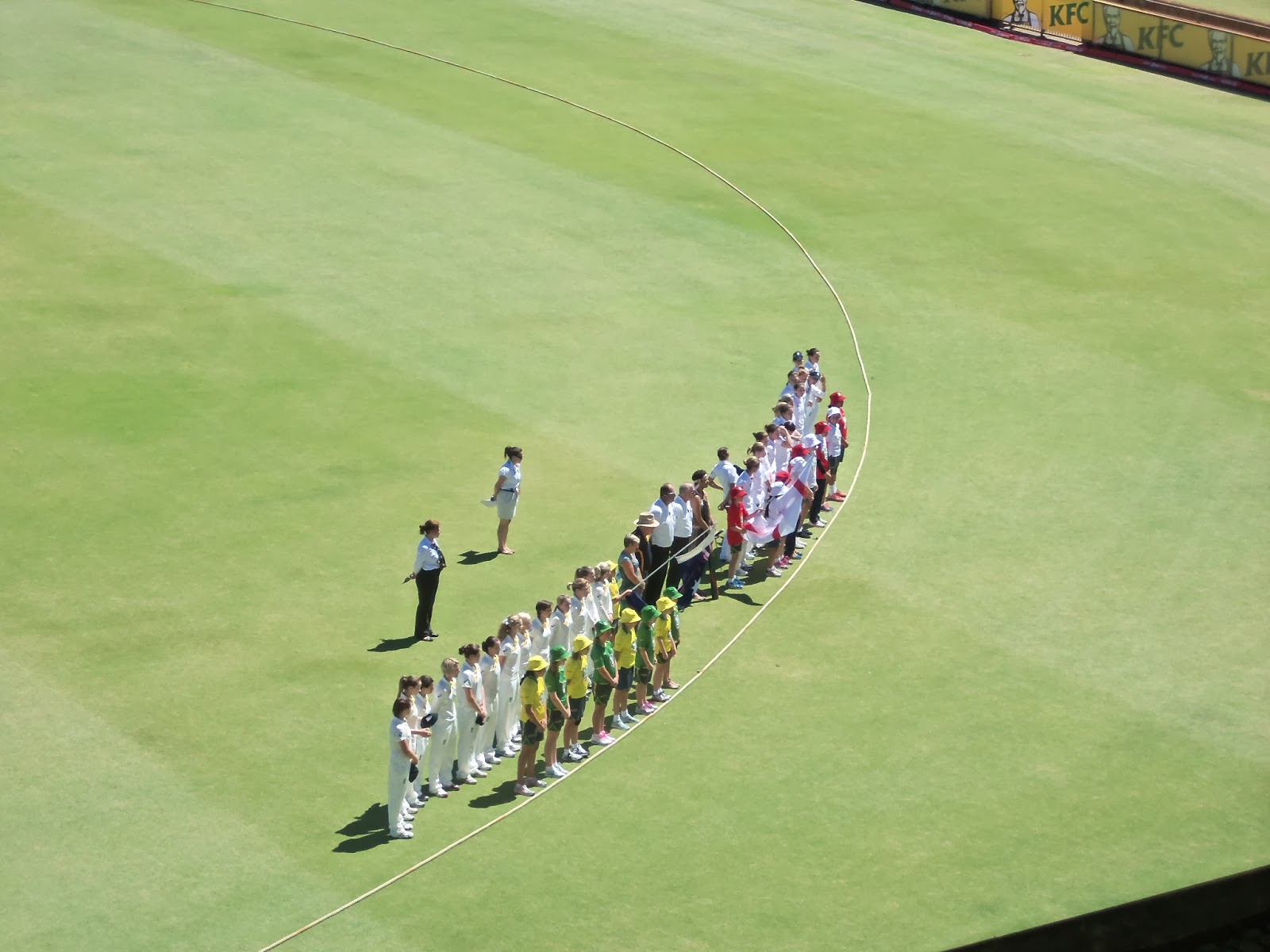
Yesterday was, of course, the first one-dayer of the women's Ashes series, at the G. So I turned up bright and early, at 8.30am, at gate 3, where the media had been told they could gain access. I found Gate 3 locked. The whole thing was, in fact, completely shambolic, with most of those who were covering the match wandering around trying to find a way in, and once we managed to gain entry, getting lost in the maze of corridors inside.

Apparently security decided they weren't going to open up the gates until 9.30, for a match that began at 10am. Why on earth they decided that no media could possibly need to get in earlier than start time (for things like, you know, the toss or the team announcements), I cannot for the life of me work out, but it seems very much like it might be a case of thinking “ah well, it's only women's cricket, why would anyone be bothered?” The MCG is a wonderful ground, but whoever made that call needs to seriously reassess things. If this happened to the media before a men's Test or ODI, you can bet there'd be a bollocking somewhere along the line – so I expect someone to get one for this. Here's looking at you, Cricket Australia!

For all that, it was absolutely awesome being up in the media centre. Highlights included: seeing the lovely Eliza again; a bird flying into the press box; meeting former Australian women's cricket captains Margaret Jennings and Raelee Thompson in the innings break; and of course, England winning. My match report is up on cricinfo, if the cricket interests you.


I'll end by saying that as I start to get to know Melbourne a little, I'm finding myself liking it more and more. It's a quirky, interesting city, and I don't think you could ever get bored here.

Thursday, January 16, 2014

Perth to Melbourne

It's been a very busy few days, reporting on the Test match at the WACA. My reports have been going up on cricinfo (day four's report is here) and I've also been doing a daily piece for All Out Cricket.

Suffice it to say that this has been some of the most exciting Test cricket I've ever seen, and it's been a real privilege to be in Australia watching and reporting on it. I'm so glad I came.


One exciting thing which did happen during the Test was being interviewed during the day three lunch break, on ABC radio. This was arranged at the last minute, and I spent the hour beforehand getting gradually more and more nervous about it (my first live radio interview, back in the UK a long time ago, was a terrifying experience). I had no idea what I was going to be asked. In the end, though, it was fine – so much so that I almost forgot I was on air for some of the time and just chatted like we were having a normal conversation. We talked a bit about the first ever women's Test in 1934 at Brisbane, and also about the contemporary women's game in England, and what the best way to increase the profile of the sport might be. And then there was the compulsory gloating section of the interview which involved talking about the men's Ashes, and precisely how miserable it has been to be a cricket fan in the UK this winter ;-) I repeated a comment which my mum made recently, about Alastair Cook not knowing the damage his team had done to family life across England during this series!

He also asked me what I made of Perth. Basically, I loved every minute I spent there. The one negative so far has been getting covered in mozzie bites on the first evening of the Test, when we rushed down at close of play to get quotes from two of the players and I didn't even think to put on insect repellent. I have since rectified that, and the bites are getting better. I'm not sure if this was due to rubbing banana skin on them, a herbal remedy which I decided to try on Monday, but it certainly seemed to help!

My last day in Perth (Amy flew to Brisbane on Tuesday morning) was lots of fun. I caught a ferry over to Fremantle, across the Swan River from Perth, with glorious views on either side as we travelled along in the sunshine (it takes about an hour and 15 minutes each way to get there). There are hundreds of mansions lining the edges of the river, many with private beaches attached; it must be amazing to live in one. We were also given some fun facts about Perth en route, such as: it is the most isolated capital city in the world.


As we docked at Fremantle, all I could think about was that this was where, in December 1934, the first ever English women cricketers had docked on arrival in Australia. The account from Myrtle Maclagan's diary is as follows:

“We were driven straight from the decks to the Town Hall at Fremantle where...eight score or so of the interested inhabitants of the place sat below and gaped up at us. The Mayor and some of his colleagues welcomed us officially and told us they hoped we would play the game in the same old way and that the better side would win.”

Here I was, all these years later, right in the same place they had started out their Australian adventure. It was poignant moment for me.

I had about three hours in Fremantle before the return ferry, so I wandered around for a while. It didn't take me long to fall in love with the place. The only word for it, really, is “cute”.


One place which is far from cute, though, is Fremantle Prison, which is a world heritage sight. It was built by convict labour in the 1850s, constructed from limestone which was quarried on sight, then after penal transportation to Australia ended in 1868 it became a maximum-security prison. What I didn't realise until I arrived is that it only closed in 1991. In fact, what really stood out to me while taking the tour was the continuity between the convict experience and the experiences of those who were there just a few decades ago.

For example, we were shown a metal bucket, kept in the cells, which remained the toilet for prisoners right up until the 1980s. (They briefly introduced chemical toilets in the 1960s, but the prisoners kept drinking the chemicals to get high.) Many of the punishments – flogging, solitary confinement in tiny dark cells – remained in place until incredibly recently. And we also saw the gallows, the same gallows which were used throughout the prison's history, right up until the death penalty was abolished in Australia in 1967. Apparently conditions remained so horrible, with the system still modelled on the British Victorian penal system, that the prisoners famously rioted in 1988, taking several guards hostage and setting a section of the prison on fire. This was, largely, the catalyst for its closure a few years later.

The creepy thing is that the tour guide said that she often has ex-prisoners come back to do the tour; and that the prison's chapel, which is still a functioning place of worship, often plays host to the weddings of ex-prisoners. Bizarre really.


I was so absorbed in the tour that when it ended, I had to peg it all the way back to the ferry, and only just made it.


Back in Perth, having checked in to my hostel, I wandered out into Northbridge, which is where a lot of the good bars and restaurants are. I found somewhere called the Brass Monkey, with live music playing, and ordered food. This was my first time wandering into an Aussie bar on my own, so I was trying hard to look casual and relaxed, and picked up one of the free magazines lying around to have a flick through before my food arrived. I suddenly realised that the one I'd chosen – entitled “Out in Perth” - didn't have the innocent meaning I'd assumed for it, but was in fact a gay magazine. Unbeknownst to me, I'd just announced myself to the whole bar as a lesbian without intending to.

I ate quickly, and left.

My only sadness on leaving Perth is that I never made it up the hill to Kings Park (I did see some of it from the ferry though). There is always sadness in leaving somewhere, especially a city I have so enjoyed, but hopefully I will make it back to Australia, and Perth, at some point.

I caught the bus to Perth airport from the city, which was an interesting journey, riding through a couple of suburbs, with the main thought in my mind being (sorry to revert to British stereotypes): “it's just like Neighbours!” I think it's the rows of bungalows, the wide cul-de-sacs, and the red slate roofs, all of which are very distinctly Australian.

The flight to Melbourne was interesting. I lucked out with a window seat, and as we took off over Perth, you could see vast expanses of open space, the like of which you will never see in the UK.
Oh: and I rewatched Blue Jasmine. It's actually really good! I must've just been knackered on the flight out here.

As we landed in Melbourne, there was a storm taking place, and every few minutes there were huge flashes of forked lightening, which was a bit scary, to be honest. I'm getting better at flying by myself though!

I caught a shuttle bus from the airport to Southern Cross station, then a taxi to my Melbourne hostel. I learned a valuable lesson when I arrived at 1am: don't arrive at a shared room in the middle of the night. Everyone else was in bed asleep, so I had to shove my bag in a corner and make my bed in the dark, while trying not to wake anyone. The main problem with this place (which is actually very nice otherwise) is that there is NO air-conditioning. This coincides with the ridiculous heat-wave taking place in Melbourne (44 degrees at the moment, and horribly humid to go along with it), which has made sleeping for the last two nights in a room with 11 other people almost impossible. I think that was my lowest moment of the trip so far. Fortunately, temperatures are due to come down this afternoon.

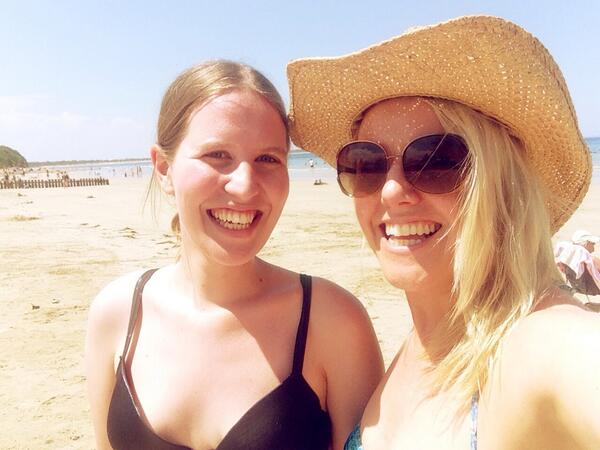
Yesterday was the nicest day. I caught a train out to the suburbs to meet the wonderful Mel Farrell. She drove us to a beach about 90 minutes away, called Torquay (no Basil Fawlty in sight though). My first sight of an Aussie beach, and it really was beautiful.


Very different from Pembrokeshire, with the palm trees and greenery lining the shore.

We had the best, chilled-out afternoon, away from the heat of the city, and went swimming in the calm turquoise ocean. (Don't worry, I made sure to apply huge amounts of sun cream before and after!)

Embedded image permalink

And then, another new experience: my first ever taste of oysters. These ones came with bacon, and they tasted exquisite. It's official – I'm an oyster convert!


Looking forward to getting stuck in to some serious city sightseeing for the rest of the day, before more journalism at the weekend.

Friday, January 10, 2014

Perth, day 3 and 4

Day 3 began with Aussie brunch in a lovely cafe in a little back street called London Court, which supposedly has "the ambience of Elizabethan London". It feels very quaint, and as Amy pointed out, much more like York (or indeed Oxford) than London, so I hope no one from Perth expects to find London like this when they arrive. The cafe, however, does exceptionally good milkshakes, which I have been reliably informed is a mark of true Australian-ness.


In the afternoon, Amy and I headed to the WACA again, this time to watch England practising in the middle and then in the nets. Temperatures are creeping up and I did not envy them out there running around chasing the ball (okay, maybe a bit of me did...how wonderful it must be to represent your country at cricket?) Meanwhile, I admired the scoreboard up close.


We then caught the free bus down to the river. I am hoping to catch a ferry across there in a few days time, but for now, we admired the Bell Tower, which apparently contains the oldest bells in Australia.


We ended up in a lovely waterfront pub, the Lucky Shag (not sure about the name...) This is apparently where the Barmy Army were when they were in Perth several weeks ago, and it was filled with a mixture of English and Aussies. The Aussies behind us decided to loudly gloat about the Ashes series to the English couple sitting next to them, but we kept our voices down and stayed out of it...for the best really.

Sitting by the Swan River at Perth was really serene and beautiful. I'm sure that if I lived here, I would spend the evenings running alongside it, and admiring the views across the shore. Once again, this outdoor lifestyle is enviable. I really like Perth.


Yesterday was the first day of "work", ie sitting up in the press box at the WACA watching cricket. Absolutely frantic trying to get everything filed, but it basically is the most amazing job in the world.


I wrote two pieces yesterday: a match report for cricinfo, and a piece for All Out Cricket on Aussie bowler Rene Farrell, who took 4 wickets on her return to Test cricket yesterday. The WACA pitch is looking like a bowler's haven, and it's going to be an exciting (and hot) few days here in Perth.

Wednesday, January 8, 2014

Perth, day 1 and 2

I intend to update the blog regularly while in Australia. Some of it will not be cricket-related so please bear with me, and just read my cricinfo reports if you are uninterested in the other stuff! :-)

So, as you may have gathered from twitter, I have safely arrived Down Under. My flight landed about 6pm local time on Tuesday evening and I am now in the centre of Perth with a bit of time on my hands before the Test starts on Friday (that is now tomorrow. This time zone thing is confusing.)

I have never flown long-haul before and I had heard many horror stories, but it all went pretty smoothly in the end (aside from leaving my hoodie at Heathrow security and having to go back for it later. Should I really be allowed to travel on my own?) Heathrow to Doha went pretty fast – in fact so fast that I didn't manage to finish watching 12 Angry Men on the first flight (he'd tantalisingly convinced 9 of the jury that the bloke was innocent by the time we landed...)

The transfer was very smooth, except for the fact that I was very thirsty so bought some coke and water at the airport, then had to down it all while queueing for security and was desperate for the loo by the time I actually boarded the second plane. The other weird thing was that I had been warned that Doha would be absolutely boiling (even though it was the middle of the night) but I was battered by wind and coldness when transferring to the terminal. The pilot even sounded surprised when announcing local weather conditions as we landed!


They know how to do duty-free in Doha!

The second flight lasted over 10 hours and really dragged. I tried to sleep, but it was so uncomfortable, I think I only managed about 3 hours. I watched Blue Jasmine, but missed the end because I fell asleep. Not sure if the film was terrible or I was just exhausted.

Very surreal landing in Australia and leaving the plane. I just kept thinking “I AM IN AUSTRALIA. I AM IN AUSTRALIA!” (Actually, I still keep thinking that.) Plus everyone was talking in the amazingly wonderful Aussie accent (still not got bored of it, not sure I will even after a month). The guy at customs sent me into the country with the advice: “Don't go breaking any hearts!”

That's not really the intention, I'm kind of here to watch some cricket.


First view of Perth. The blurriness adds to the effect as far as I'm concerned; I was very jet-lagged.

I caught the shuttle bus into the city, which was a bit scary because the driver decided to be “helpful” and drop me somewhere I wasn't expecting, rather than at the usual stop, so I ended up wandering around Perth for a while at 8.30pm local time (so it was dark), without having a clue where I was. Then suddenly I recognised one of the road names from the map I had in my head and managed to find the hotel. At this point I was regretting the amount I had packed, seeing as I was carrying it all on my back.

Checked in, unpacked and showered (best shower ever after that flight!) Then decided I was hungry, so found the local McDonalds (very authentically Australian) where they were serving fried macaroni cheese triangles, which proved impossible to resist. Mmmmmm. Then back to the hotel to collapse into bed. I fell asleep okay, but woke up at about 4am and couldn't get back to sleep for a couple of hours. I haven't ever had jet lag like this before – it's not just exhaustion, it's more a case of each time you take a step forward your brain takes a while to catch up with your body, so you almost fall over.

Yesterday I headed to the WACA on one of the free city buses (FREE buses - wow!) I got all excited and touristy outside the ground and took loads of photos, then realised I needed to start acting like a professional member of the press corps. Ahem. So I went to reception and collected a press pass, and went round to the nets to watch the end of the Aussie training session. Got a couple of quotes from Meg Lanning for my cricinfo preview and saw the air-conditioned press box where we will be based during the Test (hurrah! No sweaty press tent for us!) Great view too. Lanning looked in pretty good touch in the nets, as did Nicole Bolton.


View of Friday's pitch from the press box.

I finished the cricinfo piece while eating a sandwich, sitting outside the General Post Office. The city is currently trialling a free wifi scheme, which is a brilliant idea (I'm not sure how they afford it though?) I was sat by these really cool fountains and there were loads of kids running around getting soaking wet, but of course it didn't matter because it is about 30 degrees here (it is due to get hotter as the week goes on). I bet it is amazing growing up in Oz with the outdoor lifestyle – if I'd tried to run round in a fountain at home I'm sure my parents would have stopped me because I would have frozen afterwards! I really like that aspect of things so far.


Amy and I went for dinner at KFC last night. Anyone who has been in Oz recently will be only too aware of the “buckethead” adverts with the Aussie cricketers, but I was a bit confused to see the faces of Clarke et al staring at me as I bought my fried chicken. Very odd.


Had more trouble sleeping last night – woke up at 4am and was awake for a couple of hours. It is now the middle of the day on Thursday here and Amy and I are heading back to the WACA.


Missing everyone back home. Will keep you up to date with my adventures :-)

Thursday, January 2, 2014

2013

I recently reviewed the past year in women's cricket for cricinfo. That prompted me to reflect on the past year, in both cricketing and personal terms; the following blog post is the result. It's been the most incredible, exciting, and surreal year, so I hope you'll forgive a little self-indulgence on my part.


Right back at the beginning of 2013, amidst the January snow, curled up by the fire, I wrote my first ever piece for cricinfo (though I didn't know that's where it would end up at the time). It was about Sarah Taylor playing for Sussex 2nds (never happened, did it?), and based heavily on my PhD research. Up it went one Sunday morning onto the world's biggest cricket website, and suddenly, the world was reading about the Women's Cricket Association, and my thesis, and I had a voice.

Cricket has been a huge part of my life for the past 15 years, since I realised that I actually enjoyed watching the slow unravelling of a day's play, and that I wasn't just humouring my dad any more. People say that it's just a game, which in many ways is absolutely true. But in 2013 it became a bit more than that for me, I guess. Finding my voice in cricket, somewhere in amongst this wonderful community of cricket journalists, bloggers and tweeters, is what last year was really all about.

It's helped that 2013 was an incredible year for women's cricket, as I tried to show in that cricinfo piece. My diary entries for February are written in exhaustedly messy handwriting, full of 3.30am starts to watch the Women's World Cup matches, sleepy tweeting, and tired sadness when England lost in nail-biters to Sri Lanka and Australia, and failed to progress to the final.

February 8 – “After we had bowled Australia out for 147 I thought we had it in the bag, but no. More misery as we lost our last wicket with just 3 runs required. Payback for Edgbaston 2005, laughed the cricket gods.”

February 17 – “Australia claim their sixth(?) World Cup title. Bugger.”

February 18 – “I am officially nocturnal.”

But it was a fantastically unpredictable tournament, and for what felt like the first time, the world was really watching. My blogging throughout was just one small part of that, and I loved every minute.

In amongst it all, cricinfo launched The Cordon, and there I was, a very visible part of the cricket blogging revolution, and it was terrifying (exciting, but terrifying). I remember suddenly realising that every single one of my tweets was appearing on The Cordon's page, and wondering whether I should stop tweeting about Dawson's Creek or what I'd had for dinner.

I didn't stop.

We had a gloriously long hot summer this year, perfect for cricket – and as usual I watched a hell of a lot of it. Middlesex's championship season started so well, but went downhill. Martin's blog helped me follow the women's county season more closely than ever before. I watched with a group of friends, all of us nursing hangovers the morning after my 25th birthday party, as England bowled New Zealand out for 68 to win the Lord's Test. None of them quite understood what was happening, and I'm not sure I did either. I travelled up to Loughborough to watch England Women play Pakistan, a bit of an adventure. I watched the Champions Trophy matches accompanied by my grandma, who offered wise insights such as “I'm not sure England are doing very well, are they?” And Dad and I spent the most wonderful day at Lord's watching Joe Root copiously acquire runs against Australia, surrounded by glum-faced Aussies (gosh, that feels a long time ago, doesn't it?)

But this was a different summer, and not just for the heat. The wonderful folk at All Out Cricket decided they wanted me to report on the women's Ashes for them: the most exhausting, scary and brilliant few weeks ensued. The press tent at Wormsley during the women's Test was the best introduction to cricket journalism I could possibly have had. I struggled each day to file anywhere near my deadline, and wondered nervously each time if I'd missed something important; I never quite managed the neutrality of the Real Cricket Journo, inappropriately cheering whenever England did well; and there was often a Miles Jupp-esque “fibber in the heat” feeling lingering whenever I entered the press section; but I felt the fear and did it anyway, and it was great.

It was great for women's cricket, too: a new-format Ashes, ticket sales through the roof, amazingly full press boxes, and the TMS guys there at every game.

There were so many moments during 2013 when I found myself amongst the great and the good, feeling like I was floating, and wondering how I ended up there. Twilight in the bar at the top of the Lord's pavilion conversing with Mike Gatting; entering the Lord's media centre for the first time; struggling to think of questions to ask Sarah Taylor when she had hit 77 at Chelmsford to win the T20 for England, while in the background Mike Atherton interviewed Clare Connor, and a group of ecstatic England fans clamoured for autographs. On all those occasions, I've found myself negotiating a balancing act between starstruck fan and professional journalist. I'm still not sure I've got that one figured out.

Has the PhD suffered? In many ways, cricket is the PhD, and the PhD is cricket, but trying to keep up with thesis research while watching cricket all night and reporting on matches is difficult, to say the least. I'm not sure I did too well at it this year. No doubt I should have been writing a thesis chapter when I was writing blog entries, no doubt I should have been sleeping instead of crawling out of bed to listen to TMS, but would I have done anything differently? I don't think so. There were sacrifices to academia, too: I spent the first two days of the first Ashes Test in July holed up in a shed in a remote area of Lancashire, for 10 hours each day, doing research. Wonderful findings and picturesque scenery, but NO WIFI. I had to beg for irregular updates by text to keep me sane (thank you Ben!) So let no one say the PhD does not come first. Some of the time.

And in any case, what I've realised this year is that academia and cricket journalism inform one another, in both obvious and non-obvious ways. Here's one: part of the thesis assesses how press coverage of women's cricket has changed since 1945; I'm now part of that coverage. Suddenly I'm a bit-part player in my own thesis, and it's all a bit meta. And then there was that evening in Cambridge in November, when the university women's cricket team (so I'm told) cancelled their indoor net session to allow members of the team to attend a paper I was giving.

Amazing, really.

I'm not going to pretend that the year ended well, as far as cricket goes. I remember – and it's crazy to think that this was only a month and a half ago – the excitement and hope of rushing back from the pub, to get home in time for the first ball at midnight, not wanting to miss a second. I wanted to be able to say: “I was there. I watched that ball.” Now I think I'd rather forget this series altogether. But the shared misery of others on twitter makes it bearable, even sometimes amusing, and there's always the consolation of the women's Ashes to come. As @thecricketgeek said to me recently,


That particular series starts on January 10 in Perth, and perhaps the most exciting thing of all to transpire from 2013 is this – that I will be there, in just over a week's time, to see it all, and report on it. The trip of a lifetime, and I cannot wait.

When am I going to wake up from this dream?


I guess what I'm saying is that in general 2013 was an unforgettable year, in both cricketing and personal terms. What have I learned? That double men's Ashes series aren't a good thing, that being a cricket journalist is incredible, that Wormsley is the most beautiful place in England, and that fighting the cause of women's cricket is not the losing battle it once seemed to be.

And one more thing: Twitter is amazing. I doubt any of the best things that happened to me in 2013 would have happened without it. Yes, some people tweet utter rubbish about cricket. Yes, people are often ill-informed and irritating. Yes, I have had my fair share of trolling and the occasional spat with someone who thinks women's cricket should not exist (here's looking at you, Alan Swann). But mainly I've enjoyed talking and joking with some wonderful people, who know stupid amounts about cricket, men's and women's, and keep me on my toes. Here's to all of you, and to one special person in particular (you know who you are), who I never would have encountered without it.

Here's to 2014.

Monday, October 28, 2013

Reflections on the Tri-Series


Cricinfo has scorecards of all matches here: http://www.espncricinfo.com/ci/engine/series/630887.html

New Zealand
New Zealand will inevitably be disappointed by their performance in this series. Not that they were anywhere near favourites for the title, given their fourth-place finish in the World Cup earlier this year, but to only win the one match, and to lose the others by such big margins, must have been disappointing. Their highest score all series was 109, and in the one match they won they made just 101 and were saved only by a spectacular West Indian batting collapse.

I've nicknamed this the “Calypso Collapso Series”, based on the fact that four of six of the matches saw ridiculously dramatic batting collapses by one of the teams. New Zealand were the main culprit here. In the first match of the series, against West Indies, they collapsed in a heap from 70-4 to 81 all out, an embarrassingly low score. They followed this up with another, even more spectacular, collapse in the fifth match of the series against England, from 74-1 to 106 all out. Without Suzie Bates (the only Kiwi who averaged more than 16 in the series), they would have been in even more trouble.

As they proved at the World Cup, their batting depth is weak and they are certainly still lagging behind the top teams in the world at the moment. The new professional contracts, introduced by NZC back in April, should help, but may take some time to have a real impact.

West Indies
Series champions, and they won 3 out of their 4 matches this series, as well as the final. Assuming this series was at least partly about confirming that their brilliance in the World Cup back in February wasn't a one-off, you could say it's been a pretty successful one for them.

There was obviously the advantage of home conditions. But let's be honest, the difference in the sides this series amounts to four words: Deandra Dottin & Stafanie Taylor. With averages of 39.00 and 40.00 respectively, they far and away topped the series' batting averages. Together, their majestic batting (Taylor 51* in 47 balls, Dottin 46* in 35 balls) swept the West Indies to an easy 8-wicket victory in the final, with 3 overs to spare. Taylor's 51* was her 11th in T20Is and in the process she overtook her namesake Sarah Taylor to become the woman with the most half-centuries in T20Is. And the power of Dottin has to be seen to be believed; she rightfully achieved the Player of the Series award.

Their contributions with the ball should also not be overlooked: Taylor's bowling figures in the final were 4-1-8-1, helping restrict England to 115-5 (at least 15 runs below par). Frankly these two players have single(double?)handedly done more for women's cricket in the West Indies than it achieved in the 50 years before they came into the game.

Here is the problem for the Windies: these two are, in terms of ability, head and shoulders above the rest of the batsmen in their team. In the match they lost to New Zealand, which saw them collapse from 44-0 to 92-8 in their 20 overs, their lack of batting depth was miserably exposed. If as a team you are consistently relying on two of your players to have a good day, you're going to find yourself in trouble eventually. This, I imagine, will continue to niggle at the minds of the West Indian selectors as they move forward from this series.

England
England will be disappointed by their performance in the final, in which they suffered from a whopping 8-wicket defeat. However, they appear to have used this series at least partly as a development opportunity. With several key players missing the series – Katherine Brunt, Heather Knight, Anya Shrubsole, Laura Marsh – and with Charlotte Edwards missing the fifth match of the series against New Zealand (the first T20 since 2010 which she has missed for England), this was the time for some of the newer players to step up to the plate (am I allowed to use a baseball analogy in a cricket blog?)

What, then, can England take from this series? Two key positives stand out for me. Natalie Sciver is one of them. Having made her debut against Pakistan early in the summer, she is already establishing herself as a key middle-order anchor for England, with her 36* in 33 balls in the final ensuring England's total was at least respectable (and who can forget that glorious huge six off the last ball of the innings?) And her hat-trick in the fifth match of the series against New Zealand – the first by an Englishwoman in T20Is – was probably the highlight of the whole series for England.

Jenny Gunn is the other. Brunt and Shrubsole's absence turned her into the senior pace bowler, but she handled the pressure well and her 11 wickets at an average of 8.00 saw her finish as top wicket-taker in the series. Given that she was captaining England during the fifth match of the series against the Kiwis, her figures of 5-18 in that game are particularly impressive, and add weight to the argument that she is in contention to be Edwards' successor. Okay, so the super over in the sixth match against the West Indies didn't exactly go to plan, but let's not focus on the negatives...

It's hard, though, to ignore some of the strange decisions taken by the selectors during this series, following on from the initial selection of a squad that was, as Syd has pointed out on numerous occasions, one batsman short. This was supremely obvious during the frankly painful collapse against the West Indies, the worst Calypso Collapso of the series in my book, which saw them sink from 69-0 to 96-8. But it was also enhanced by some odd selectorial decisions throughout, in particular playing just four specialist batsman in the last two matches of the series.

It looks like the selectors were using this series as an opportunity to get a look at some of the bowling talent England have got coming through the ranks at the moment (both Beth Langston and Kate Cross made their international debuts), with the Ashes etc in mind, but what happened to the “winning is a habit” attitude?

Anyhow, presumably we'll get a further insight into just what the selectors have made of this series when the ODIs start tomorrow. Or maybe we'll just get more baffling decisions, who knows.

Women's cricket.
There were encouraging signs this series in relation to the status of the women's game in the Caribbean. The final reportedly attracted a crowd of 3500 to the Kensington Oval, supposedly the highest ever crowd at a women's cricket match in the West Indies (the historian in me is always a little sceptical about those kind of claims, but I'll go with it). The big-hitting fireworks of Dottin and Taylor is doing wonders for women's cricket out there, and long may it continue.

It's great, too, that the WICB streamed the series live for free across the world. But it's also unfortunate that for most of us, the feed was so blurry that it was difficult to work out a) what the score was, b) which over was being bowled, and c) whether you were asleep, awake, or so tired you were hallucinating yet another batting collapse. Is it really so difficult to ensure that the stream is of a reasonable quality?

And if the stream is inevitably blurry, perhaps we could actually have some decent commentary? The appallingly uninformed and sexist commentary during Saturday night's final (watch out for a more detailed piece on The Cordon about this soon) was a disgrace. WICB need to seriously rethink their promotion strategy for women's cricket if that's the kind of commentary they think is acceptable during a women's international.

Talking of which, WICB President Dave Cameron's closing gambit in his interview during the innings break on Saturday night – “I think the women are so beautiful they could be excellent ambassadors” – is enough in itself to make me question quite how far the WICB, who ignored women's cricket for so many years, are really on board with the promotion of the women's game. At least, with APPROPRIATE promotion of the women's game. (Naked calendars don't count. Sorry.)

Time will tell.

Final thought
I cannot understand not wearing batting helmets in any international cricket match. Watching Juliana Nero duck under bouncers from Nicola Browne without a helmet nearly gave me a heart attack. I've never even seen anyone bat without a helmet even at women's club level in England. Can't we make them compulsory or something?

Saturday, September 14, 2013

10 reasons England won the Ashes


Before this summer started, it was generally felt that the women's Ashes would be a closely-fought contest, with Australia favourites for the trophy. That prediction now looks rather pessimistic to England supporters. England won 12-4 on points, with 5 wins in a row to end the series, and thoroughly convincing victory margins of 51 runs, 5 wickets, 15 runs, 5 wickets and 7 wickets in those matches. Truth be told, this was a thrashing by England, and one that no one expected. Here are 10 reasons why it happened:


1. Sarah Taylor
Taylor's three successive ducks in the World Cup in February put England on the back foot but she has clearly recovered from that blip in form. She scored 269 runs at an average of 38.42 across the series and her innings at Chelmsford – 77 off 57 balls – effectively secured the match for England. Her glovework was also impeccable throughout. And that's not even mentioning THAT catch at Hove, the best I've ever seen by a keeper in men's or women's international cricket.

2. Heather Knight
Back in June at Loughborough, I watched Knight make 14 off 46 balls against Pakistan. Those in the crowd who remained awake spent their time grumbling at her terrifically slow scoring. Yet her record partnership with Taylor at Hove in the third ODI, of which Knight hit 69 off 65 balls, secured victory for England, and she was then drafted into the T20 squad at the last minute by the selectors. And no one can forget her majestic 157 at Wormsley, without which England would almost certainly have lost the Test. She finished as England's top run-scorer, with 301 runs at an average of 37.62, and she was also, deservedly, Player of the Series.

3. Lydia Greenway
It is difficult to exaggerate the impact Greenway's amazing fielding can have; her one-handed pick up and throw in from extra cover to dismiss centurion Sarah Elliott for 10 in the second innings of the Wormsley Test is just one example from this series. She also proved herself once again to be possibly England's best T20 batsman, hitting 80* at Southampton, the highest ever score for England Women in a T20, and gloriously smashing the winning runs to take England to a memorable series victory. One of the stars of the series.

4. Katherine Brunt
Brunt was without doubt the pick of England's bowlers this series. Besides being their top wicket-taker, with 9 wickets at an average of 25.88, she was also by far the most consistent. She looked equally dangerous across all three forms of the game and was finished the series as Player of the Match at Durham, giving away just 14 runs in her 4 overs. The best bowler in the world at the moment.

5. Ellyse Perry
Perry is the Aussie superstar, their big name, but she utterly failed to perform this series with the ball. Of course it was always going to take her time to adjust to English conditions and pitches, but she struggled to find the right line throughout, finishing with only 2 wickets at an embarrassing average of 129.50. On a good day, Perry can blast through a side on one leg, as she proved in the World Cup final. She had very few good days this series.

6. The failure of the Australian openers
Rachael Haynes was Australia's top-scorer at the World Cup earlier this year. The most she managed this series was 25*, and she was ignominiously dropped for the third ODI after two successive ducks at Lords and Hove. Alyssa Healy, who replaced Haynes in the third ODI, and Elyse Villani, opening in the third T20 at Durham, fared no better with a duck apiece. The question of who might open for Australia when England arrive in January is something the Aussies will need to give serious thought to in the coming months.

7. England's top order
A criticism often levelled at this England side has been their over-reliance on Edwards to perform with the bat. I accused them of the same old story after their appalling batting collapse at Lords, but in the following five matches they absolutely proved me wrong. Natalie Sciver's contributions with the bat throughout, including 37* in 44 balls at Durham, demonstrated that England were not overly reliant on the “usual suspects”. And, in the second ODI at Hove, every one of England's top six batsmen contributed double figures.

8. The lack of Australian bowling depth
Unfortunately for the Aussies it is all too obvious that they are missing the all-round talent of Lisa Sthalekar (she retired earlier this year). Captain Jodie Fields spent much of the series juggling a set of bowlers who simply did not look like taking a wicket: Megan Schutt and Julie Hunter were both toothless and expensive. Holly Ferling is a special talent, but she is still young, raw and erratic; she was dropped midway through the series, then brought back for the last two T20 matches, epitomising the headaches of the Australian selectors this series. This lack of bowling depth is another issue they will need to resolve before the follow-up series early next year.

9. England's bowling unit
Edwards blamed England's defeat in the World Twenty20 in Sri Lanka last year on “a lack of discipline with the ball”. Given that Brunt, recovering from injury, could still only bowl in short spells, and that Anya Shrubsole was injured early on in the first T20 at Chelmsford and was out for the rest of the series, the pressure was on the rest of the England bowlers to provide crucial support. They did not disappoint. By contrast with the Aussie bowlers, the consistent line and length of Laura Marsh, Dani Wyatt and Danielle Hazell saw Australia's batsmen tied in knots and left them with below-par scores, including just 91 off their 20 overs at Durham. Here was the key difference between the two sides.

10. The new format
An obvious one, this, but if the Ashes had been decided just based on that one-off game at Wormsley, we would be talking about a drawn Test and the Aussies retaining the trophy. The new multi-format series, on the other hand, gave England a chance to demonstrate their abilities in the shorter forms of the game and secure a victory on points.